Why cross-border credit data matters under CCD2: Perspectives from regulators, supervisors and banks
Key insights from regulators, supervisors and banks on implementing CCD2 and fair cross-border lending.
-8.png)
European regulators, financial supervisors, consumer authorities and the banking sector are increasingly aligned on one point: consumers should not lose access to credit simply because part of their financial history was built in another EU Member State.
That was one of the key messages emerging from Mifundo's European roundtable, Completing the Single Market for Consumers: Making Cross-Border Borrowing Possible in the EU, held on 16 June. Supported by the European Innovation Council, the event brought together around 30 representatives from 18 EU countries, including the European Commission, national financial supervision and consumer protection authorities, as well as industry and consumer organisations.
With the revised Consumer Credit Directive (CCD2) becoming applicable across the European Union in November 2026, the discussion reflected a growing recognition that improving cross-border access to credit requires both regulatory clarity and practical infrastructure.
A growing gap in Europe's Single Market
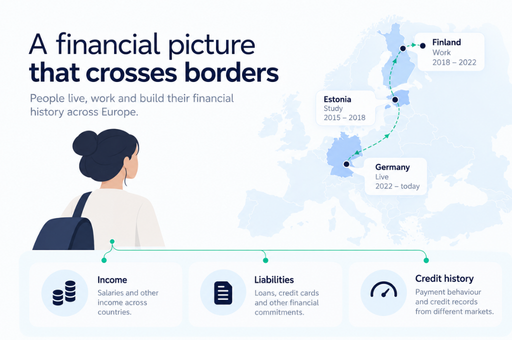
Europe has made it easier than ever for people to move across borders to work, study or build their careers. Around 45 million Europeans have built part of their financial history outside their current country of residence. Yet that financial history often remains trapped within national borders.
Mifundo presented findings from its European Innovation Council-funded research into cross-border credit data across Europe. The research showed that many banks are not unwilling to serve cross-border customers. They simply lack access to verified information in a format that fits their existing credit assessment processes.
Without that information, lenders face two difficult choices: reject creditworthy applicants because too little information is available, or approve loans without seeing existing financial obligations abroad.
Banks already using cross-border credit data reported that access to more complete information changed a significant share of their lending decisions, illustrating how domestic-only assessments can affect lending outcomes.
The research also showed that foreign and multi-country customers already represent a significant part of many European banks' portfolios. For traditional banks, they typically account for 10-15% of customers, while some banks report shares exceeding 25%. Digital banks often report even higher proportions.
CCD2 raises the importance of non-discrimination
As CCD2 approaches, non-discrimination in creditworthiness assessments is becoming an increasingly important operational issue.
Representatives from European and national institutions highlighted that consumers who have exercised their right to free movement should not be disadvantaged simply because part of their financial history was built in another Member State.
For banks, this means moving beyond domestic-only credit assessments wherever relevant cross-border information is available. The discussion reflected a broader shift from asking whether cross-border credit data should be used to how it can be incorporated into responsible lending in a secure, proportionate and consumer-controlled way.
Building trusted infrastructure for cross-border lending
The roundtable also explored practical implementation.
Mifundo demonstrated how verified credit bureau data and categorised bank account information can be collected with the consumer's consent, standardised across countries and integrated into existing credit assessment processes. A live demonstration for public authorities showed how consumers securely authorise and share their cross-border financial information with a lender.
Several common themes emerged throughout the discussion:
- consumers must remain in control of their data through informed consent;
- cross-border data sharing must comply with GDPR and financial regulation;
- trusted, standardised infrastructure is essential for responsible cross-border lending.
Looking ahead
The event marked another step towards a more integrated European credit market. As November 2026 approaches, CCD2 will place greater emphasis on comprehensive creditworthiness assessments and equal treatment of consumers across the European Union.
For millions of Europeans who are trying to build their financial history outside their current country of residence, this creates an opportunity for fairer access to credit.
For banks, it represents an opportunity to make more informed lending decisions based on a more complete picture of creditworthiness.
Building a true Single Market for financial services ultimately requires that financial history can travel with consumers as easily as they do.