CCD2 applies from 20 November: What European supervisors and regulators expect from banks
What do European regulators expect from banks as CCD2 and Article 6 apply from 20 November? READ MORE! ↓
-13.png)
From 20 November 2026, the revised Consumer Credit Directive (CCD2) will apply across the European Union. For banks preparing for the deadline, Article 6 and its non-discrimination principle should be firmly on the implementation agenda.
Over recent months, Mifundo has been in active dialogue with financial supervisors, regulatory authorities and the European Commission on the practical implications of CCD2. The message from these discussions has been consistent: banks are expected to comply with the non-discrimination requirements of Article 6.
What Article 6 means for banks
Unlike previous EU consumer credit legislation, Article 6 of CCD2 explicitly identifies nationality and place of residence as grounds on which consumers legally resident in the EU must not be discriminated against. This makes the provision a significant addition to the broader non-discrimination protections set out in Article 21 of the Charter of Fundamental Rights of the European Union.
In line with Recital 31 of CCD2, this does not require banks to enter new markets, provide services in areas in which they do not conduct business, or prohibit offering different conditions where they are objectively justified. What CCD2 requires is that, within the markets and areas where a bank chooses to operate, consumers are not disadvantaged solely because of their nationality or place of residence. Such consumers must be treated equally and offered equal conditions.
Banks should therefore review their credit policies to ensure that any distinctions between applicants are based on objective, proportionate and demonstrable factors rather than broad exclusions linked to protected characteristics.
What European regulators and supervisors are saying
In June, Mifundo brought together around 30 representatives from 18 EU countries for an EU-level discussion on cross-border borrowing and CCD2. Participants included the European Commission, national regulators, financial supervisors and consumer protection authorities, as well as representatives from commercial banks, industry and consumer organisations.
Article 6, non-discrimination and cross-border creditworthiness assessment were among the central topics discussed.
Since then, Mifundo has continued these discussions directly with regulators and supervisors across Europe, including authorities from some of the EU's largest banking markets.
Across these conversations, the regulatory expectation has been clear: banks need to comply with Article 6 and be able to reflect the non-discrimination principle in their credit processes.
For banks, this makes Article 6 an operational issue as much as a legal one.
The cross-border data question
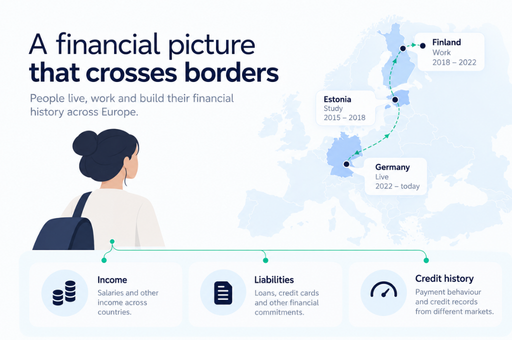
Compliant application of Article 6 rules raises one practical question related to cross-border credit data. Consider a customer who has spent ten years living, working and building a strong credit history in one EU country before moving to another. Their domestic credit file may show only part of that history. Banks can decline applicants based on credit risk, but their assessment must comply with Article 6.
When they apply for credit, the bank may only see the domestic part of their financial history. The customer can therefore appear to have a thin credit file even though years of relevant repayment information exist elsewhere in the EU.
Banks preparing for Article 6 should examine how their current processes handle these customers.
Does nationality or residence affect the assessment process? What happens when relevant credit history exists in another Member State? Can the bank access the information needed for a proper creditworthiness assessment? And can it demonstrate that comparable customers are treated consistently?
November is approaching
Banks have only a few months left before CCD2 applies.
The regulatory conversations taking place across Europe point in the same direction: Article 6 requires action from banks. Credit, risk and compliance teams should understand where customers with cross-border financial histories enter their processes and whether those processes meet the non-discrimination requirement.
While Articles 18(3) and 19 of CCD2 continue to enforce access to foreign credit data for creditworthiness assessment, connecting with all foreign databases directly may be a legally and technically complex task for a creditor.
Across the EU's 27 Member States, credit data comes from different providers, with different scoring systems, languages and legal requirements. Mifundo has brought 20+ credit bureaus across the EU and beyond together with Open Banking data into one standardized platform, covering more than 70% of the European population.
See how Mifundo works → mifundo.com