CCD2: 5 things banks should know about the new creditworthiness regime
What changes for banks as EU moves from CCD1 to CCD2? Impact on credit assessment, scoring and cross-border lending.
.jpg)
The new Consumer Credit Directive (CCD2) is more than an update to the EU’s consumer-credit framework. For banks, it brings a more explicit and demanding framework around how creditworthiness is assessed, what data can underpin that assessment, how automated decisions are handled, and how consumers are treated in cross-border lending.
As banks prepare their lending processes for the CCD2 environment, it is worth looking beyond individual provisions and considering the broader direction of travel: from a relatively principles-based approach under CCD1 towards a more structured, transparent and demonstrable credit-assessment process.
Here are five points worth putting on the radar:
1. From “sufficient information” to a “thorough assessment”
Under CCD1, Article 8(1) required creditors to assess a consumer’s creditworthiness on the basis of “sufficient information” before granting credit.
CCD2 raises the bar. Article 18(1) requires a “thorough assessment” of creditworthiness, carried out in the consumer’s interest and with the objective of preventing irresponsible lending and over-indebtedness.
The question is therefore not only whether a creditworthiness assessment was performed, but whether the bank can demonstrate that the methodology, data and decisioning process were appropriate to the particular credit decision.
2. The data behind the assessment matters more than ever
CCD2 Article 18(3) provides considerably more detail on the information to be used for creditworthiness assessments.
The assessment should draw on “relevant and accurate information” concerning, among other things:
- income and expenditure;
- financial and economic circumstances;
- financial assets and liabilities;
- other financial commitments; and
- evidence of income or other sources of repayment, where relevant.
The information must also be “necessary and proportionate” to the nature, duration, value and risks of the credit. This is a significant development from CCD1's more general reference to “sufficient information”.
For banks, this means understanding whether the internal and external data used in credit decisioning is current, accurate and relevant to the assessment.
3. A credit score is not the same thing as a creditworthiness assessment
One of the clearest changes in CCD2 is found in Article 18(11): “the assessment of creditworthiness shall not be based exclusively on the consumer’s credit history.” This does not mean that credit scores or credit bureau data can no longer be used. Far from it. Rather, CCD2 makes clear that a credit history or score should be one component of the broader creditworthiness assessment, rather than a complete substitute for it.
For banks, this raises another important question about the role played by scores within their underwriting architecture. A score can be highly valuable as an efficient indicator of credit risk, but the wider assessment should also take account of the consumer’s current financial and economic circumstances.
In other words, the score can inform the decision; it should not become the entire decision.
4. Automated credit decisions: explainability and human intervention
Automation is transforming consumer lending, but CCD2 introduces new considerations where creditworthiness assessments involve automated processing of personal data.
Article 18(8) gives consumers the right to request “human intervention” and a “clear and comprehensible explanation of the assessment of creditworthiness”. Consumers can also express their point of view and request a review of the assessment and lending decision.
This is an important development compared with CCD1, which contained no equivalent sector-specific framework for human intervention in automated credit assessment.
For banks and for providers of scoring and decisioning technology, this means that explainability, contestability and human review need to be considered as part of the lending process, rather than as an afterthought.
5. Cross-border lending: non-discrimination enters the picture
CCD2 also introduces a broader non-discrimination principle. Article 6(1) requires Member States to ensure that creditors do not discriminate against consumers “on grounds of nationality or place of residence” where those consumers legally reside in the Union and apply for credit within the scope of the Directive.CCD1 did not contain an equivalent general provision concerning discrimination against consumers.
This is particularly relevant to cross-border lending. A consumer’s nationality or EU country of residence should not, in itself, become a reason to deny access to credit.
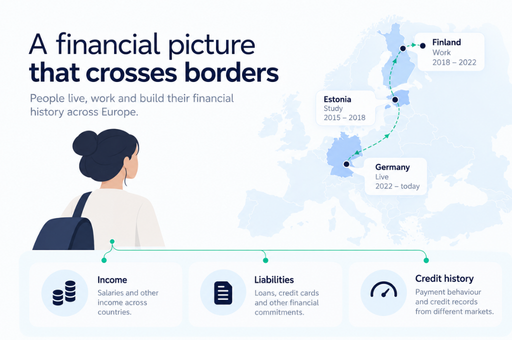
At the same time, credit assessment remains inherently dependent on reliable information. If a consumer moves between Member States, or applies for credit in a country where the bank has less access to relevant credit information, the resulting information gap should not simply translate into a less favourable treatment of the consumer.
For banks developing cross-border lending propositions, this creates an interesting intersection between non-discrimination, data availability and credit risk management.
The bigger picture for banks
Taken together, these provisions raise the standard for consumer credit assessment. Under CCD2, banks increasingly need to demonstrate that the data, methodology, scores or models and resulting decision together support a thorough, proportionate and reviewable assessment.
For digital and cross-border lending, better models alone are not enough. A sophisticated credit-scoring model cannot compensate for missing information about a consumer’s financial commitments in another Member State.
Mifundo helps address this gap by enabling banks to access relevant credit information across European markets and incorporate it into their existing lending processes. The aim is to give banks a more complete cross-border view of the consumer while leaving their credit models, scores and underwriting decisions in their own hands.
This article provides a high-level overview of selected CCD2 provisions and is not legal advice. Banks should assess the requirements applicable to their activities with their legal and compliance advisers.